- Blog
- History of Gryffindor: From Godric to Harry Potter
History of Gryffindor: From Godric to Harry Potter
Meta Title: History of Gryffindor: From Godric to Harry Potter Meta Description: Explore Gryffindor’s history from founder Godric’s ideals of bravery to Harry Potter’s legacy – plus house lore, rivalries & fan theories.
From Godric to Harry: The History and Legacy of Gryffindor House
Gryffindor House has a lion-hearted legacy in the wizarding world. For generations, it has been synonymous with bravery, chivalry, and daring adventures at Hogwarts. This detailed journey through Gryffindor’s history covers its founding by the bold Godric Gryffindor, the evolution of its values over the centuries, famous Gryffindor heroes (from the medieval era to the era of Harry Potter), legendary artifacts like the Sword of Gryffindor, and even some fun fan theories. Whether you’re a proud Gryffindor alum or just a curious Harry Potter fan, grab your wand (and maybe a Sword of Gryffindor) as we delve into the rich history of Hogwarts’ most courageous house!

Godric Gryffindor: The Founder’s Origins and Philosophy
Every great story has an origin, and for Gryffindor House it begins with Godric Gryffindor himself. Godric was one of the four famous founders of Hogwarts in the 10th century, hailed as one of the greatest wizards of his age [1]. He grew up “from wild moor” – later specified to be the West Country village that was renamed Godric’s Hollow in his honor [2]. In fact, Godric’s Hollow (the future home of Bathilda Bagshot, Albus Dumbledore, and the Potter family) takes its name from Gryffindor, highlighting how influential he was [3]. As a character, Godric Gryffindor embodied the very traits his house would prize: courage, boldness, and a sense of justice. He was said to be the most accomplished duelist of his time and never shied from a challenge [4].
Godric’s founding philosophy set Gryffindor House apart. He believed that any witch or wizard with magical talent deserved to attend Hogwarts, regardless of their blood status [4]. This progressive stance – championing equal opportunity for Muggle-born students – put him at odds with Salazar Slytherin, who infamously preferred pure-blood students. Gryffindor’s insistence on inclusivity and fairness was ahead of its time and established the house’s reputation for standing up for the underdog [5]. His bold ideals even led to a final bitter clash with Slytherin, who left the school after their disagreement over admitting Muggle-borns [6]. This rift planted the seeds of a rivalry that would persist for centuries (more on that later).
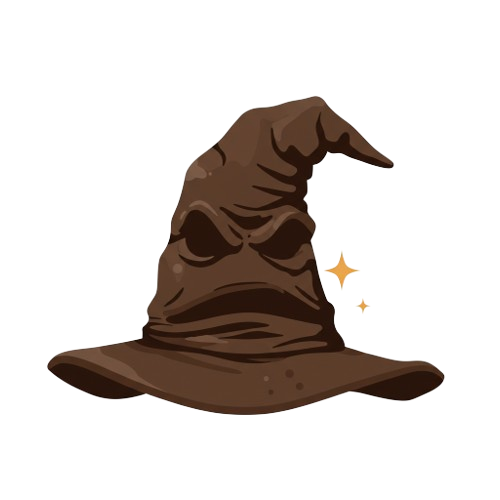
In addition to his principles, Godric Gryffindor had a flair for the dramatic. He literally left his mark on Hogwarts through two magical items: the Sorting Hat and the Sword of Gryffindor. According to legend, the Sorting Hat was originally Godric’s own hat, which he enchanted (with help from the other founders) to continue sorting students long after they were gone [3, 7]. And indeed, the hat still sings of Gryffindor’s virtues each year, praising “the bravest were prized far beyond the rest” in one famous song [8].
As for the Sword of Gryffindor, it was Godric’s prized weapon – a goblin-made sword wrought with pure silver and large rubies in its hilt [9]. Goblin craftsman Ragnuk the First forged the sword to Gryffindor’s specifications, and it was so magnificent that Ragnuk tried to steal it back, accusing Godric of theft [10]. Godric, being no one to trifle with, defended his ownership. He sent Ragnuk’s minions packing (without bloodshed, but with a warning) and kept the sword, though resentful goblin legends later insisted the sword was “stolen” [10]. This bold and uncompromising stance in the face of injustice is quintessential Gryffindor. Gryffindor’s “sword and wand” approach to dueling – using a sword against Muggles when a wand was unsporting – further cemented his image as a warrior who valued honor as much as victory [11, 10].
Godric Gryffindor’s personality shines through every aspect of his house. From the start, he instructed the Sorting Hat to choose students who were bold and brave at heart [3]. He actively sought out students who showed courage and a “strength of heart,” making those qualities the cornerstone of Gryffindor House [12, 4]. Thanks to Godric’s influence, Gryffindors would come to be known for standing up for what’s right, even when it’s difficult – a legacy of bravery and moral fortitude that carries on to this day [5].
Traits and Traditions of Gryffindor House
What does it really mean to be a Gryffindor? In the words of the Sorting Hat, “Where dwell the brave at heart, their daring, nerve, and chivalry set Gryffindors apart.” These lines perfectly sum up the key traits of Gryffindor House [13, 14]. Courage is naturally the foremost virtue – whether it’s rushing into danger for a just cause or simply having the nerve to stand up for one’s beliefs. Daring and bravery (even a dash of recklessness) are encouraged, as is chivalry – the old-fashioned term for honor, valor, and doing the right thing. Gryffindors are also known for determination and nerve in the face of challenges [15]. It’s no surprise that members of this house tend to be the types who charge at a problem head-on rather than shy away.
Several enduring traditions and symbols reinforce these traits:
- Emblem: The house emblem is the lion, the king of beasts, which represents courage and nobility [16]. In heraldry and mythology, the lion is associated with bravery – a perfect mascot for Gryffindor’s fearless ethos.
- Colors: The house colors are scarlet and gold, evoking the image of roaring flames (fittingly, Gryffindor corresponds to the element of fire) [17]. In fact, those colors were chosen because of the element of fire: scarlet for a lion’s mane and tail, and gold for its coat [18]. You’ll see scarlet and gold everywhere in Gryffindor life – from the students’ ties and scarves to the decor in their common room.
Speaking of which, the Gryffindor common room itself is a beloved tradition. Located high in Gryffindor Tower, it’s accessible through a secret entrance behind the portrait of the Fat Lady, a painting of a woman in a pink dress [19]. She famously demands a password (often a silly or inspiring phrase) before she’ll swing open to let students in. This means Gryffindors must remember their passwords or risk sleeping in the corridor! The common room beyond is cozy and warm, decked in red and gold hangings, with a crackling fireplace and plenty of squashy armchairs for doing homework or celebrating after Quidditch matches [19]. It’s said that the walls are lined with portraits of past Gryffindor heroes and Head of House figures, so the young lions are always literally surrounded by their house’s proud history [20]. (If you look closely, you might even spot a portrait of Godric Gryffindor himself on the seventh floor [3]!)
One charming tradition unique to Gryffindor (and somewhat infamous among other houses) is the Gryffindor password ritual. The Fat Lady’s passwords have ranged from the practical (“Caput Draconis,” meaning dragon’s head, in Harry’s first year) to the whimsical (“Mimbulus mimbletonia”) and even absurd. Gryffindors get a good laugh – and a lesson in teamwork – out of huddling together to recall the week’s new password. And if someone forgets it? Well, let’s hope a friend comes along, or else you might witness a desperate Gryffindor begging an unyielding portrait to let them in.
Another hallmark of Gryffindor life is its house ghost, Sir Nicholas de Mimsy-Porpington, better known as Nearly Headless Nick. Nick is a cheerful if slightly pompous ghost who entertains (and occasionally annoys) Gryffindor students with tales of his courtly life and botched execution. Why “nearly” headless? As Hermione Granger once incredulously asked, Nick obligingly demonstrated that his head hangs on by a single flap of skin – he was sentenced to be beheaded, but the executioner’s axe never fully severed his neck [21, 22]. Despite this grisly detail (played mostly for laughs), Nearly Headless Nick is a beloved part of Gryffindor’s identity. He embodies the house’s ability to keep a sense of humor and dignity even in less-than-ideal circumstances (Nick still yearns to join the Headless Hunt but is excluded due to his “incomplete” decapitation!). Having Nick floating around the common room, offering congratulations after Quidditch victories or commiseration after tough defeats, gives the Gryffindor students a friendly reminder that even in ghostly form, a true Gryffindor’s spirit lives on.
Finally, Gryffindor House has a proud tradition of competition – in the most spirited, friendly sense. From Quidditch matches to the annual House Cup, Gryffindors throw themselves into Hogwarts competitions with gusto. The house has won numerous Quidditch Cups and House Cups over the years, often neck-and-neck with their rivals in Slytherin. (In fact, before Harry Potter arrived at Hogwarts, Slytherin had won the House Cup for six or seven years straight – a streak Gryffindor famously broke in Harry’s first year with some last-minute heroics and a bit of help from Professor Dumbledore [23]!). Gryffindors can be a tad competitive, even cocky, about these victories, but it’s mostly in good fun. After all, their victories are usually hard-earned through courage and teamwork, which are exactly the qualities Gryffindor celebrates.
Historical Highlights: Gryffindor Through the Centuries
After its founding around 990 A.D., Gryffindor House continued to blaze a brilliant trail through Hogwarts history. Godric Gryffindor’s influence ensured that bravery and doing what is right remained the guiding principles for his house. One of the earliest and most defining events in Gryffindor (and Hogwarts) history was the falling-out between Godric and Salazar Slytherin over admitting Muggle-born students. This schism didn’t just end a friendship – it created an enduring house rivalry (Gryffindor vs. Slytherin) that would echo through the ages [6, 24]. Salazar Slytherin’s departure also left behind a dark legacy in Hogwarts: the hidden Chamber of Secrets, with its monstrous Basilisk intended to purge the school of Muggle-borns. That threat would lie dormant until the modern era, when – fittingly – a brave Gryffindor student would rise to confront it.
Throughout the medieval and early modern periods, details of specific Gryffindor alumni are sparse. What we do know is that Gryffindor’s reputation for producing heroes and leaders only grew over time. The house’s values of courage and honor often put its members on the front lines of wizarding conflicts. For example, during various goblin rebellions and wars against dark wizards in bygone centuries, it’s said that many brave witches and wizards from Gryffindor answered the call to defend the wizarding world.
Fast-forward to the late 19th and 20th centuries, and we find some of the most famous names in wizarding history wearing the scarlet and gold:
- Albus Dumbledore was sorted into Gryffindor in the late 1800s and later became not only the Transfiguration professor and Head of Gryffindor House, but eventually the revered Headmaster of Hogwarts. Dumbledore’s defeat of the dark wizard Grindelwald in 1945 was a triumph often attributed to his Gryffindor qualities of bravery and moral conviction.
- Under Dumbledore’s mentorship, Gryffindor House thrived; he even hand-picked Minerva McGonagall, another proud Gryffindor, as his successor to lead the house when he became Headmaster [25, 26]. Professor McGonagall’s tenure as Head of Gryffindor (and deputy Headmistress) in the mid-20th century through the 1990s kept the house disciplined, fair, and fearless – she was known to tell her lions that she’d be “most seriously displeased” if a Gryffindor ever brought shame to the school, a testament to the high standards Gryffindors are held to.
The Second Wizarding War (1990s) is often seen as Gryffindor House’s finest hour. During the rise of Lord Voldemort, many of the wizarding world’s key resistance leaders were former or current Gryffindors. The Order of the Phoenix, Dumbledore’s secret society against Voldemort, was stacked with notable Gryffindor alumni like Sirius Black, James and Lily Potter, Remus Lupin, Arabella Figg, and of course Dumbledore himself. In the next generation, Harry Potter and the D.A. (Dumbledore’s Army) continued that tradition – indeed, a great number of D.A. members hailed from Gryffindor as well [27].
During the climactic Battle of Hogwarts in 1998, it was noted that while most Slytherin students evacuated, the senior Gryffindors (along with their Hufflepuff and Ravenclaw comrades) stayed to fight Voldemort’s forces shoulder-to-shoulder [29, 30]. Neville Longbottom – a once-timid Gryffindor who bloomed into a true lion – famously pulled the Sword of Gryffindor from the Sorting Hat and destroyed Voldemort’s last Horcrux (Nagini), a moment that symbolically linked back to Godric’s legacy in the most dramatic way [31].
In the post-war world, Gryffindor’s story continues. After Voldemort’s fall, Neville Longbottom went on to become the Herbology professor at Hogwarts and, fittingly, the new Head of Gryffindor House by the 2000s [25]. Under Neville’s watch (and that of Headmistress McGonagall), new generations of Gryffindors carry forward the values instilled by Godric so long ago. The house has evolved with the times – embracing students of all backgrounds, celebrating not just traditional daring but also kindness and bold creativity – yet the core identity of Gryffindor remains the same.
Legends of Gryffindor: Notable Figures and Icons
Harry Potter (left) and Professor Dumbledore examine the Sword of Gryffindor – a treasured relic that has aided true Gryffindors in times of need [32, 31].
Gryffindor House’s history is illuminated by legendary figures and iconic objects that have become almost mythic in their significance.
The Sword of Gryffindor – A True Gryffindor’s Weapon
One cannot speak of Gryffindor legends without mentioning the Sword of Gryffindor. This gleaming sword, with its silver blade and ruby-encrusted hilt, was once Godric Gryffindor’s personal weapon [9]. Forged by goblin metalworkers a millennium ago, the sword is enchanted and indestructible. What makes it truly special is that it has a knack for appearing when a “true Gryffindor” is in need [32]. Throughout the Harry Potter series, the sword famously presented itself to those who demonstrated quintessential Gryffindor bravery: Harry pulled it out of the Sorting Hat to slay the Basilisk, and years later Neville Longbottom drew the very same sword to destroy Voldemort’s final Horcrux [31]. According to wizarding lore, the sword has absorbed power from those deeds – notably, it imbibed Basilisk venom, making it even more lethal to dark creatures thereafter [31].
Fun fact: The sword’s goblin creator, Ragnuk, was so enamored with his work that he concocted a story claiming the sword was stolen from him by Gryffindor. To this day, some goblins stubbornly hold to that “fake myth” of Gryffindor’s theft [33, 34]. Nonetheless, wizarding history recognizes the sword as rightfully Godric’s.
The Sorting Hat – Godric’s Magical Legacy
While the Sorting Hat belongs to all Hogwarts, it has a particularly special connection to Gryffindor. This battered, talking wizard’s hat originally belonged to Godric Gryffindor himself [35]. When the four founders pondered how students would be sorted after their time, Godric had the brilliant idea to enchant his hat with their collective intelligence and values [7]. The Hat also has a cheeky side; it famously hat-stalled for nearly five minutes trying to decide if Hermione Granger was Gryffindor or Ravenclaw, and it actually listened when a young Harry Potter begged not to be put in Slytherin. The fact that Harry’s wish to be in Gryffindor was honored highlights a sweet secret: often, those who end up in Gryffindor are there because they chose bravery or valued it deeply [36, 37].
Apart from its sorting duties, the Sorting Hat has twice aided Gryffindor House in extraordinary ways: it concealed the Sword of Gryffindor within itself, producing it to Harry and Neville in their hours of need.
The Fat Lady & Gryffindor Tower
The Fat Lady’s portrait is an institution in Gryffindor House. This rosy-cheeked lady in a pink silk dress is the guardian of Gryffindor Tower’s entrance, and she takes her job very seriously. Students must give her the correct password, which she gleefully changes on a regular basis. The Fat Lady is known for her dramatic flair and temperamental nature. (Indeed, in Harry’s third year, Sirius Black attacked her portrait when she refused him entry, a truly shocking moment for the house!). The Fat Lady’s presence has added a touch of light-hearted guardianship to Gryffindor life.
Nearly Headless Nick – The Friendly Ghost
We’ve touched on Sir Nicholas already, but as one of Gryffindor’s most distinctive figures, he deserves a bit more spotlight. Sir Nicholas de Mimsy-Porpington lived in the late 15th century and was a courtier who, as legend has it, tried to straighten a lady-in-waiting’s teeth and accidentally gave her tusks. For that blunder, he was sentenced to death – by a blunt axe. Poor Nick endured 45 hacks to the neck, and his head never quite came off, earning him the ghastly (but amusing) nickname Nearly Headless Nick [22]. He chose to remain as a ghost at Hogwarts, and he has been floating through Gryffindor Tower for five centuries. For Gryffindors, Nick is a comforting figure – a reminder that even in death, a true Gryffindor’s spirit remains jovial, loyal, and courageous.
Famous Gryffindors Through the Ages
Gryffindor’s legacy is perhaps best illustrated by the long list of legendary witches and wizards who have called the house home.
- Godric Gryffindor (Medieval era): Founder of the house, famed duelist, champion of Muggle-borns’ rights, and owner of the Sorting Hat and Sword of Gryffindor. Godric set the template for what it means to be a Gryffindor [4, 38] – bold, fair, and chivalrous.
- Albus Dumbledore (1881–1997): Headmaster of Hogwarts and perhaps the only wizard Voldemort ever feared. Dumbledore was a Gryffindor student in his youth and later taught Transfiguration and became Head of Gryffindor House before ascending to Headmaster [25]. Renowned for his wisdom and powerful magic, he defeated the dark wizard Grindelwald and led the resistance against Voldemort.
- Minerva McGonagall (born 1935): A brilliant witch and Animagus, McGonagall was sorted into Gryffindor (where she even played Quidditch). She later became a professor and served for many years as Head of Gryffindor House under Dumbledore [25]. Stern but deeply caring, McGonagall exemplified Gryffindor’s mix of courage and integrity.
- James Potter & Lily Potter (1970s): Harry Potter’s parents were both proud Gryffindors. James was a ringleader of the mischievous Marauders and an accomplished Chaser. Lily Evans was known for her kindness and steadfast principles. They defied Voldemort three times and ultimately sacrificed their lives out of love.
- Harry Potter (1980–present): The Boy Who Lived himself was almost placed in Slytherin, but his choice to reject darkness and value bravery put him firmly in Gryffindor [37]. Harry became the house’s most celebrated hero, leading Dumbledore’s Army, facing Voldemort multiple times, and eventually defeating the Dark Lord.
- The Weasley Family: The Weasleys are practically Gryffindor royalty. Arthur and Molly Weasley were both Gryffindors, as were all seven of their children [39]. Each brought something special, from Bill's curse-breaking to the twins' comic relief, and Ron and Ginny's heroism.
- Hermione Granger: Often called “the brightest witch of her age,” Hermione’s vast intellect might have made her a fit for Ravenclaw – but her values and her bold spirit put her in Gryffindor. She shows that Gryffindors can be brainy and bookish and incredibly brave at the same time.
- Neville Longbottom: Neville’s evolution from a timid, forgetful boy into the slayer of Nagini is one of Gryffindor’s favorite success stories. His triumphant moment with the Sword of Gryffindor proved Dumbledore’s belief that Neville would “show his worth” was absolutely on point.
- Sir Nicholas de Mimsy-Porpington (Nearly Headless Nick): Our favorite Gryffindor ghost has been a steadfast part of Gryffindor’s story since the 1490s.
Gryffindor vs. Slytherin: A Historic House Rivalry
No discussion of Gryffindor history would be complete without examining its famed rivalry with Slytherin House. It’s a clash literally as old as Hogwarts itself – dating back to that fateful conflict between Godric Gryffindor and Salazar Slytherin. The two founders started as friends, but their ideological split over blood purity set them at odds [6]. Salazar’s departure created a template: Gryffindor stood for openness and bravery, Slytherin for exclusivity and cunning.
Over the centuries, this rivalry played out in countless friendly (and sometimes not-so-friendly) competitions. Gryffindors and Slytherins often vie for the top spot in house points and on the Quidditch pitch. A Gryffindor vs. Slytherin Quidditch match is invariably a heated affair. The House Cup races are just as intense. For a stretch in the late 1980s, Slytherin dominated the House Cup, much to Gryffindor’s frustration. But in 1992, Professor Dumbledore’s controversial last-minute award of points to Harry and his friends clinched the Cup for Gryffindor [23].
Culturally, the two houses sometimes view each other with a mix of respect, envy, and exasperation. Gryffindors tend to see Slytherins as too cunning and ambitious for their own good, while Slytherins often see Gryffindors as reckless glory-seekers. Phineas Nigellus Black (a Slytherin headmaster) once sniped that Gryffindors have a penchant for “pointless heroics” [40].
Yet, with time and perspective, it’s clear that Gryffindor vs. Slytherin is not black-and-white good vs. evil. Both houses have their virtues and flaws. During the Battle of Hogwarts, we saw a poignant moment of unity and contrast: while most Slytherins evacuated, Professor Slughorn (Slytherin) later returned with reinforcements to fight side by side with Gryffindors [41]. Meanwhile, all of Gryffindor House stood their ground to defend the school.
Today, the rivalry persists in healthy forms – Quidditch matches, academic competitions, and plenty of good-natured teasing. The rivalry has mellowed from the days of enmity to something more akin to a sports rivalry.
The Modern Legacy of Gryffindor House
Gryffindor’s story is still being written with each new Hogwarts class, but its modern legacy in the wizarding world is already firmly established. In the aftermath of the Second Wizarding War, Gryffindor’s name became almost synonymous with the heroes of Voldemort’s defeat.
At Hogwarts, Gryffindor House continued to thrive under the leadership of Professor Neville Longbottom, who took over as Head of Gryffindor House by around 2008 [25]. Neville’s own journey became a sort of template for young Gryffindors: the house that nurtured him would do the same for them. Meanwhile, Professor McGonagall, as Headmistress, kept a watchful eye on her former house.
In the broader wizarding society, Gryffindor’s modern legacy is visible through its notable alumni. Hermione Granger went on to become Minister for Magic. Harry Potter became Head of the Auror Department. Ron Weasley helped run the family joke shop. Ginny Weasley became a star Quidditch player and journalist. These individuals carried the values of Gryffindor into every corner of wizarding life.
An interesting aspect of Gryffindor’s legacy is how it influenced attitudes towards the other houses in the post-war era. Many from Harry’s generation worked to ease old prejudices. For example, when Harry’s middle child Albus Potter got sorted into Slytherin, Harry publicly supported his son, emphasizing that bravery can be found anywhere. In a way, the ultimate Gryffindor legacy might be a Hogwarts where the houses have a friendlier rivalry and come together when it counts.
Fun Facts and Fan Theories
No deep dive into Gryffindor would be complete without some fun trivia and fan lore that fans love to discuss.
- House Motto in Latin: Displayed on a stained glass window in the common room is the phrase “Forti Animo Estote,” which roughly translates from Latin as “Be of good courage” or “Have a brave spirit” [43, 44].
- Gryffindor Name Origin: In French, “griffon d’or” means “golden griffin” – a griffin being a mythical creature part lion, part eagle [45]. Additionally, the Old High German/Old English word “dor” means “door” or “gate” [46]. Some fans like to imagine Gryffindor as the “golden griffin gate.”
- Password Hijinks: Post-1994, after Sirius Black tried to break into Gryffindor Tower, Hogwarts security considered moving to a more secure method than passwords. However, the portraits insisted on keeping things as they were.
- Do You Have to Ask to be a Gryffindor? A popular fan theory suggests that the Sorting Hat doesn’t sort purely based on your personality, but on what traits you value or request. In Gryffindor’s case, the Hat famously took personal choice into account for Harry [37].
- The Mysterious “Gryffindor descendants”: Unlike Salazar Slytherin, no direct bloodline is confirmed for Godric Gryffindor. J.K. Rowling never confirmed any heirs, though fans speculate about Harry or Dumbledore.
- Is Fawkes Actually Godric Gryffindor? A wild fan theory speculates that Fawkes the phoenix was actually Godric Gryffindor’s Animagus form. The idea points out that Fawkes played a critical role in aiding Harry and staying with Dumbledore [47].
- The Case of the Short-Tempered Gryffindors: It’s mentioned that more than a few notable Gryffindors were “short-tempered” [48] – think of Ron’s outbursts or McGonagall’s stern fury. This is usually chalked up to their passionate natures.
Frequently Asked Questions about Gryffindor House
Q: Who founded Gryffindor House? A: Gryffindor was founded by Godric Gryffindor in the 10th century, one of Hogwarts’ four legendary founders [1].
Q: What traits do Gryffindors possess? A: Gryffindors are known for bravery, courage, daring, chivalry, and determination [15]. They tend to be bold of heart and willing to stand up for what’s right. The Sorting Hat famously says Gryffindors have “daring, nerve, and chivalry” in abundance [13].
Q: What are Gryffindor’s colors and symbol? A: Gryffindor’s house colors are scarlet red and gold, and its emblematic symbol is the lion [16]. These colors correspond to the element of fire [18].
Q: Why do Gryffindor and Slytherin have a rivalry? A: The rivalry goes all the way back to the founders. Godric Gryffindor and Salazar Slytherin had a serious falling-out over Slytherin’s desire to exclude Muggle-born students [6].
Q: Who is the Gryffindor house ghost? A: It’s Sir Nicholas de Mimsy-Porpington, better known as Nearly Headless Nick [22].
Q: What is the Sword of Gryffindor? A: The Sword of Gryffindor is a famous goblin-made sword that belonged to Godric Gryffindor [9]. Enchanted and indestructible, the sword appears to Gryffindors in times of need – only a “true Gryffindor” can pull it out of the Sorting Hat [32].
Q: How do you access the Gryffindor common room? A: Via the portrait of the Fat Lady on the seventh-floor corridor. You must tell her the correct password [19].
Q: Who are some famous Gryffindors? A: Notable Gryffindors include Albus Dumbledore, Harry Potter, Hermione Granger, Ron Weasley, the entire Weasley family, James and Lily Potter, Sirius Black, Remus Lupin, Minerva McGonagall, and Neville Longbottom [49].
Q: What is Gryffindor’s motto? A: The Gryffindor house motto is “Forti Animo Estote,” which is Latin for “Have a brave heart” [43, 44].
Q: Who leads Gryffindor House in current times? A: Neville Longbottom is known to have taken over as Head of Gryffindor (as well as Herbology professor) sometime after the Second Wizarding War [25].
Sources:
- [1, 11, 5, 6] Wizarding World – The Stories of the Hogwarts Founders (2019)
- [50, 4] Harry Potter and the Goblet of Fire – The Sorting Hat’s Song (2000)
- [38, 35] Harry Potter Lexicon – Godric Gryffindor (character profile)
- [16, 49] Wizarding World – Official Gryffindor House Fact File
- [15, 18, 43] Harry Potter Wiki – “Gryffindor” (Fandom)
- [31] Harry Potter and the Chamber of Secrets – Chapter 17, “The Heir of Slytherin” (1998)
- [9, 51] Wizarding World – The Sword of Gryffindor by J.K. Rowling (2015)
- [32, 21] Audible Blog – “Everything You Need to Know About Gryffindor House” (2025)
- [25] Harry Potter Wiki – Head of Gryffindor House (Fandom)
- [36, 37] Glamour – “New Harry Potter Sorting Hat Theory” (2017)
- [47] ComicBookResources – “50 Harry Potter Fan Theories” (2021)
- [1, 2, 4, 8, 31, 35, 38, 50] Godric Gryffindor – Harry Potter Lexicon
- [3] Godric Gryffindor | Official Harry Potter Encyclopedia
- [5, 6, 10, 11, 33, 34] Harry Potter | The stories of the Hogwarts founders | Wizarding World
- [7, 21, 22, 32] Everything you need to know about Gryffindor house | Audible.com
- [9, 51] Harry Potter | The Sword of Gryffindor | Wizarding World
- [12] Godric Gryffindor | Hogwarts Life Wiki | Fandom
- [13, 14, 15, 18, 20, 23, 24, 26, 27, 28, 29, 30, 40, 41, 42, 43, 45, 46, 48] Gryffindor | Harry Potter Wiki | Fandom
- [16, 39, 49] Gryffindor | Official Harry Potter Encyclopedia
- [17] Gryffindor Fandom
- [19] The Gryffindor common room | Official Harry Potter Encyclopedia
- [25] Head of Gryffindor House | Harry Potter Wiki | Fandom
- [36, 37] This New "Harry Potter" Sorting Hat Theory Will Make You Rethink Which House You're In | Glamour
- [44] Forti Animo Estote - Gryffindor's Motto - Instagram
- [47] 50 Harry Potter Fan Theories That Could Be True - CBR